Wasps and bees do important work pollinating plants, but when they build a nest next to your door, they become a hazard. Late summer and early fall are when colony populations peak, which is why stings are most common in August and September. This guide covers how to identify wasp and bee nests, the biggest mistakes homeowners make, and when to bring in a professional.
Wasps vs. Bees: Know the Difference
Bees are usually fuzzy, rounder, and docile. They feed on nectar and mostly ignore you unless you threaten the hive. Wasps, including yellow jackets, paper wasps, and hornets, have smooth, sleek bodies and are more aggressive. They scavenge for protein and sweets, which is why they hover around outdoor grills and trash cans.
The treatment approach is different for each one, and it matters. Honey bees are valuable pollinators and protected in many states, so removing a hive often requires a beekeeper, not an exterminator. Wasps, on the other hand, can generally be treated and removed.
Where Wasps and Bees Build Nests
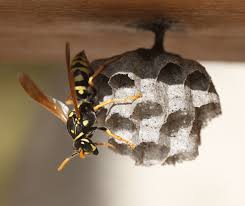
Paper wasps attach umbrella-shaped nests to eaves, porch ceilings, and window frames. Yellow jackets build in the ground, in wall voids, and under porches, and they often sneak into homes through gaps. Hornets build large papery football-shaped nests high in trees or under roof overhangs. Carpenter bees tunnel into wood, leaving perfectly round holes in decks, fascia boards, and sheds.
Walk around your home and look up — under soffits, around gutter ends, and where rooflines meet. Check sheds, swing sets, mailboxes, and the underside of outdoor furniture. Nests are easiest to spot in the morning or evening when wasps return to them.
The Biggest Mistake: Sealing the Nest Shut
When people find a nest, they often try to close the entry hole with caulk or tape. This is dangerous. Sealing a nest traps the wasps inside, and they will chew their way out through drywall or find another opening during est — which can push them straight into your living space. Ground-nesting yellow jackets, in particular, will respond by swarming out of the entrance when disturbed.
Why DIY Spraying Often Fails or Backfires
Over-the-counter wasp spray works when you hit the nest directly, but it rarely kills the queen. It also leaves you standing within stinging distance. If you spray a ground nest during the day, workers are out foraging and will come back to a disturbed colony, ready to defend it. Even store-bought traps only catch a fraction of the nest population.
For nests high up, inside walls, or in the ground, the safe approach is professional elimination. Pest control experts use specialized treatments that knock down the colony quickly, and they have protective gear and ladders to reach nests you should not climb toward yourself.
When You Absolutely Need a Professional
Call an expert if the nest is high in a tree or on a roofline, if it is inside a wall or attic, if it is in the ground near a path you use, or if anyone in your home is allergic to stings. The same goes for a nest that keeps reappearing in the same spot year after year — that points to an established colony nearby that needs proper treatment.
Professional treatment usually involves one visit for visible nests and a follow-up inspection to confirm the colony is gone and the entry points are sealed. If carpenter bees have been damaging wood, the technician can also help you protect the wood from future tunneling.
Preventing Future Nests
Wasps return to areas that look like good nesting spots. Sealing gaps around utility entries, keeping trash cans covered and away from doors, cleaning up fallen fruit, and painting or sealing bare wood all discourage them. Traps placed in early spring can reduce the queen population before nests grow. For many homeowners, the most reliable plan is a yearly perimeter treatment before peak season.
If you find a wasp or bee nest on your property, do not poke it, seal it, or spray it yourself when it is large or in a tough spot. Call 1-844-817-0084 and we will match you with a local expert who can remove the nest safely and help keep it from coming back.